



This article was written in partnership with Hexa. Hexa recently launched a new accelerator, Hexa Sprint, which is currently supporting defense startups through its program.
If you’re building in defense and looking to accelerate your growth, you can apply here.

When we first met at Hexa on a Sunday afternoon a few months ago, we had no idea we would end up here. Friday evening. 6:30 PM. Martin de Gourcuff welcomes us warmly to his bunker-like offices and shows us around the former production lines of the startup turned unicorn.
The next day, the news is brutal: the war in Iran has just begun. Like the Russian-Ukrainian war before it, this new conflict reveals a profound paradigm shift, a new era of the battlefield. While the collective imagination still pictures the so-called “Primes”, like Safran, Thales, or Airbus, as the drivers of innovation, it is now startups that are developing cutting-edge technological products at record speed, addressing the challenges of today’s conflicts directly on the ground. These startups support the military directly on the front lines, delivering the best solutions in a world where everything moves fast. A world where mechanization gives way to dronization, where automation and artificial intelligence play an ever-growing role, and where electronic warfare has become a major stake in modern conflicts.
Beyond software, it is also production capacity, factories, and supply chains that are changing the game, at a time when the multiplication of regional conflicts makes a large-scale war increasingly plausible. At the same time, an existential question arises: is Europe capable of producing its own weapons, on its own soil, with full control over its components?
It is in this context that we had the chance to meet Martin de Gourcuff, co-founder and CTO of Harmattan AI, but also Hadrien Canter, CEO of Alta Ares, and Arnaud Valli, Head of Public Affairs at Comand AI. Come on board with us to the heart of the “New Defense Edge” to discover these French startups at the forefront of modern conflicts.
Part 1: New rules, New players, New game
The peace dividend era is over. As global conflict intensifies and the shadow of a large-scale war has never loomed closer, Europe no longer has a choice: the time has come to rearm.
Asymmetric wars have multiplied and complicated threats (electronic warfare, drone swarms, cyber attacks), creating new challenges that traditional defense strategies struggle to address. The Russo-Ukrainian conflict has provided a brutal demonstration: the most sophisticated weapons no longer guarantee victory. Drones costing a few thousand euros are destroying armored vehicles worth several millions. To quote Andrius Kubilius, European Commissioner for Defense and Space, we are now witnessing “€1M missiles facing €10,000 drones.” The conclusion is clear: the rules of the game have changed.
European defense is going through a pivotal moment, shaped by both geopolitical tensions and economic transformations. Under the constant pressure of an open war at its doorstep, and caught in the grip of Sino-American rivalry, Europe must respond. In this new paradigm, traditional defense players are less equipped to operate at the required pace, leaving considerable room for startups capable of iterating quickly and adapting to constantly evolving threats.
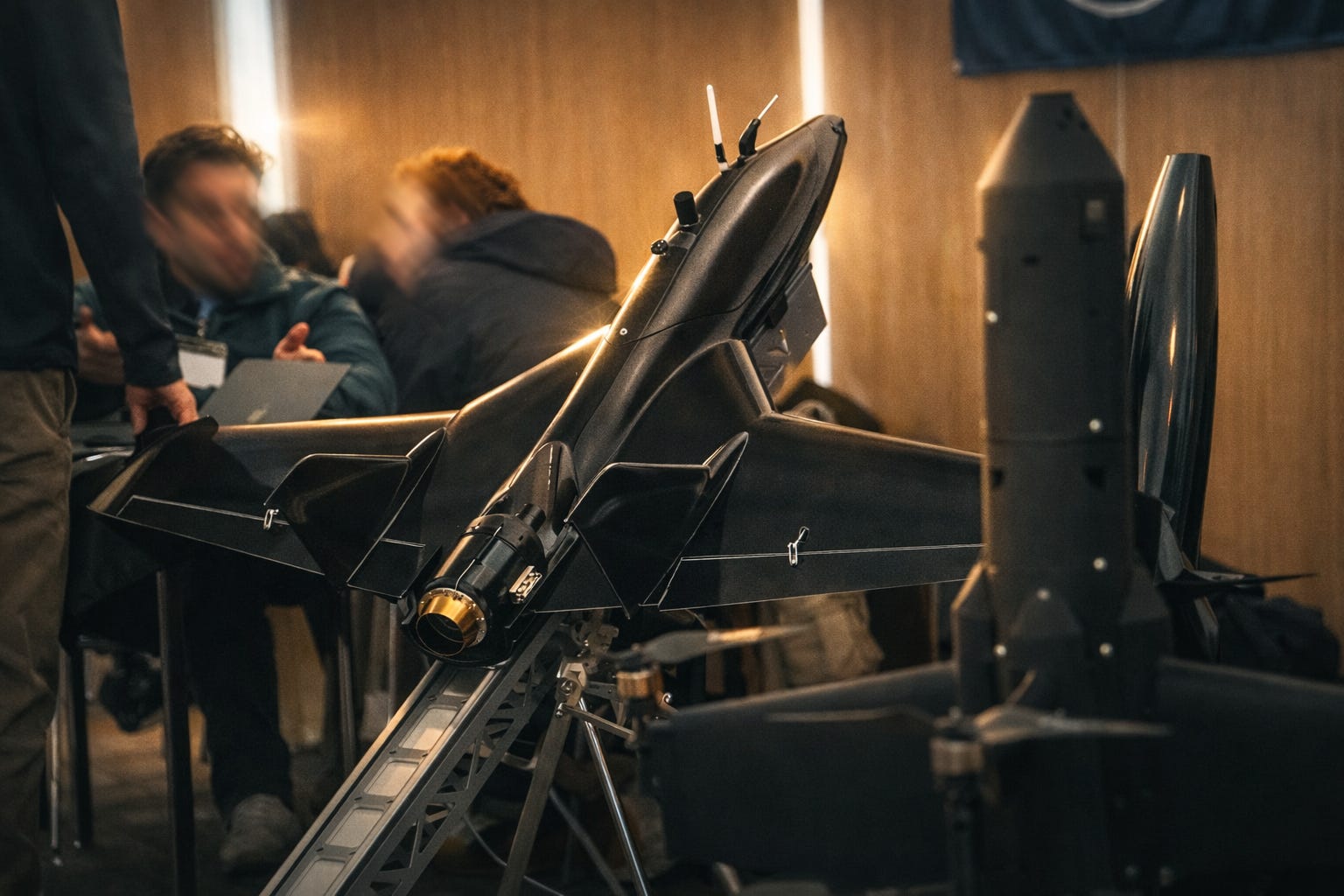
Harmattan AI, Alta Ares, Comand AI: the new French startups redefining the European defense landscape.
Born from this urgency to rearm, these three companies were built around the same conviction: today’s threats call for responses that traditional players cannot provide.
Cheap to produce, practically invisible to traditional radars, and capable of being deployed in massive swarms, drones create a radical asymmetry against classic interception systems, which they overwhelm as easily as they bypass. This is the problem Harmattan AI, founded in April 2024, is tackling. Initially focused on detecting anti-personnel mines (an activity it continues to develop in parallel), the startup gradually focused on drone interception, offering verticalized solutions from software to hardware. A trajectory that convinces investors: in January 2026, Harmattan raised $200 million, bringing its valuation to $1.4 billion.
Alta Ares takes a similar path, but its origin is radically different. Founded two years ago directly in Ukraine by Hadrien Canter, the startup was literally born on the front line. Its first solution, Gamma ISR, helps relieve the cognitive load of operators forced to scan video feeds for hours. The second, Pixel Lock C-UAS, powered by artificial intelligence, allows for the automatic interception of loitering munitions like Shahed drones. Validated on the Ukrainian battlefield, the technology has since been tested under extreme conditions in Estonia and validated by NATO.
Beyond counter-drone warfare, modern conflict poses another equally critical challenge: command. In environments saturated with sensors, drones, cyber signals, and OSINT, decision-makers face unprecedented volumes of data, well beyond what a human alone can process in real time. This is precisely the challenge Comand AI wanted to address. Founded by Loïc Mougeolle, former Director of Strategic Innovation at Naval Group, the startup develops military command software enabling faster decision-making by officers, along with automated after-action reviews to extract real-time lessons from operations.
Three companies, three approaches, but a shared genesis. That of a generation that chose to put its skills in service of European defense, not out of opportunism, but out of conviction. Arnaud Valli, former political advisor to NATO and now Head of Public Affairs at Comand AI, summarizes this shift: “We are right in the middle of an AI arms race, and if we are going to have effective systems, it would be better if liberal democracies had them. And I agreed with the secondary option: it would be good if Europe and France had them too.”
A sentiment shared by Martin de Gourcuff, who admits he never imagined working on defense systems: “Today, I have a much clearer sense of the purpose it serves.”
At Alta Ares, this utility takes an even more concrete form. “Alta Ares is a mission-driven company,” asserts Hadrien Canter.
“There are few companies today in Europe that code in the morning, and by the evening, what they coded is running on interceptor drones shooting down Shaheds. And that is a point of pride.”
Software as a lever for operational superiority
War has always been a technological accelerator. From gunpowder to the atomic bomb, from World War II radars to the drones of Mosul, every major conflict has reconfigured the relationship between innovation and military power. But something has fundamentally changed this time: the decisive advantage is no longer about tonnage or caliber. It comes down to the software layer, the one that turns an ordinary drone into a precision system, or a thirty-year-old platform into an augmented combat tool.
Beyond the robotization of the battlefield, we are now witnessing the autonomization of the entire chain, from decision-making to combat action. As Martin de Gourcuff sums it up:
“We can add far more features to the defense systems we develop thanks to software and algorithmic advances, especially in machine learning. And that, in particular, makes it possible to render the systems much more autonomous than they were before.”
In a context where defense budgets do not allow everything to be replaced, and where acquisition cycles remain long, software becomes the fastest and most cost-effective lever to increase the power of existing arsenals. Software thus improves hardware, as Arnaud Valli points out:
“We have systems like the T55, a tank dating back to the 50s, which is still used but is improved thanks to software. Software is not just an application overlay: it is a way to improve the hardware, to make it more competent and more effective [...]. Software is still quite decisive in today’s digitized armies, which are increasingly robotic.”
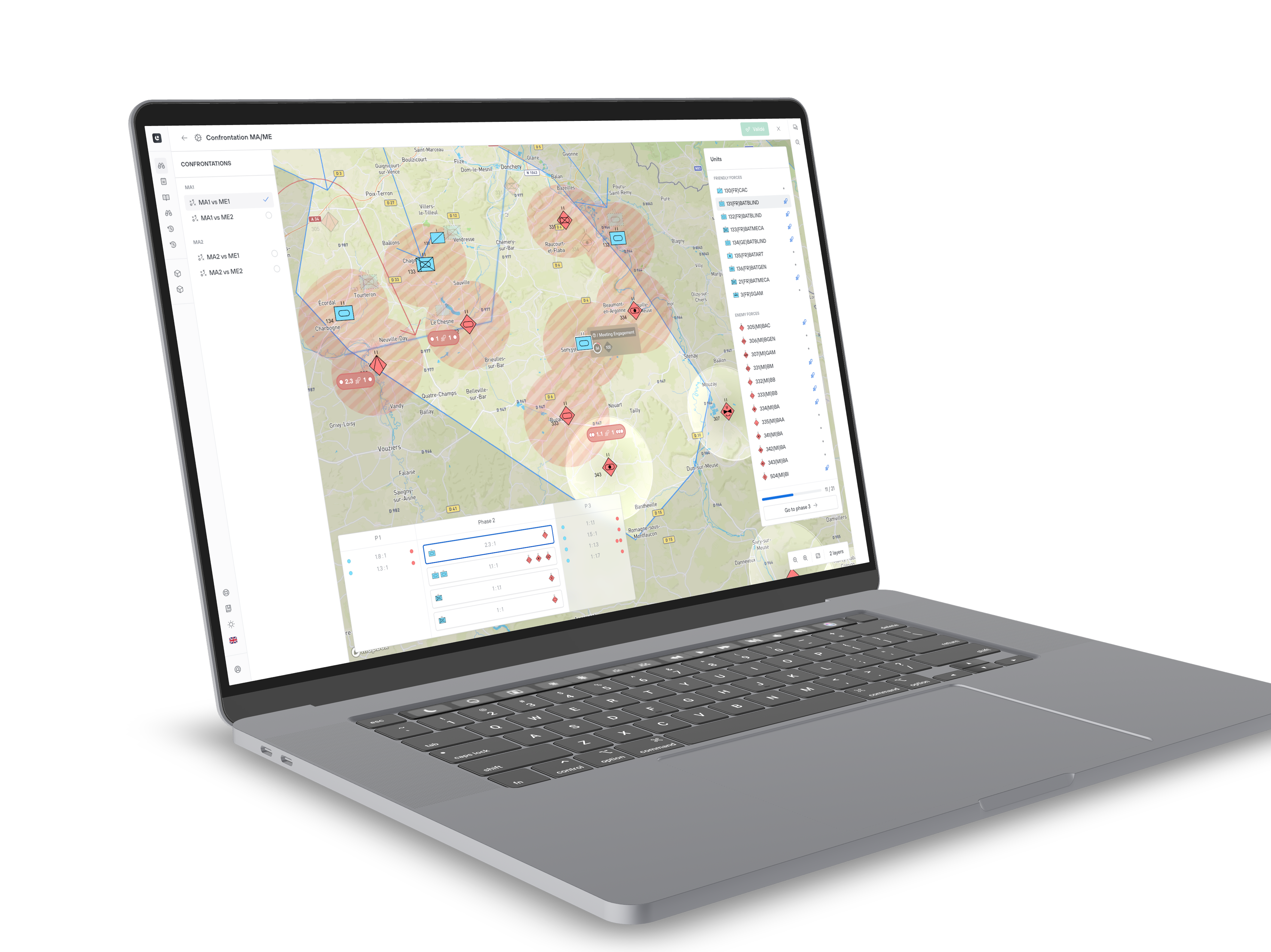
A paradigm shift in the defense industry
In a war of position like in Ukraine, this autonomization translates into a concrete operational advantage: mobilizing fewer soldiers, in a context where armies are struggling to recruit, with better-performing equipment. Above all, it provides an agility that large industrial groups are structurally incapable of offering. In Ukraine, the rules of the game evolve in a matter of weeks: jamming, fiber-optic drones, electronic countermeasures, new flight profiles. The Primes, excellent at building sophisticated systems over long cycles, find themselves outpaced by the rhythm of a war of attrition where what matters most is resilience against enemy innovation and the ability to mass-produce.
Arnaud Valli, who observed this system from the inside during his years at NATO, points out its limitations:
“In France, the armed forces make a request, the DGA translates this operational need into an industrial need and asks the manufacturers to produce it. And the user hardly ever spoke to the manufacturer, except upon delivery. Which, unfortunately, sometimes resulted in absurdities between the demands of the operators and the final product.”
Startups, on the other hand, operate with a different mode of functioning, often referred to as DefTech. “What does that imply? It is a much more iterative way of working, directly with the users,” specifies Arnaud Valli.
Major industrial players have clearly taken the measure of these new actors: Dassault Aviation took a stake in Harmattan AI, while Safran acquired Preligens, a French startup using AI for satellite image analysis. These moves go beyond mere financial logic: they reflect an assumed complementarity. Hadrien Canter places this dynamic in its broader context:
“I think we are right in this pre-war phase, and that we have an enormous responsibility, which obliges us to have the greatest rigor in what we do. France has an important role to play in building the European defense of tomorrow. And this role can become a reality with the help of startups, but also with the help of large corporate groups.”
The awakening of institutions and private players
This realization is not limited to large manufacturers; institutions are also beginning their shift. Certain initiatives have emerged, such as the creation of the Future Combat Command (CCF) or the Defense Innovation Agency (AID), aimed at modernizing the French army and integrating startups into the Defense Technological and Industrial Base (BITD). Hadrien Canter measures its daily impact:
“There is a real awareness compared to when we started two years ago. This is largely due to an organization called the Drone Pact. It is a real success; it helps us enormously to identify the right points of contact and to bridge the gap between the final need and the manufacturer. It is a link that was stretched too thin for too long, and we take great pleasure in shortening it.”
This openness also translates into concrete contracts: Harmattan AI has secured commitments with the French and British armies, a strong signal of institutional credibility acquired in barely two years of existence.
Private capital is following suit. Funds like Sisyphus Ventures or Expansion, and dedicated acceleration programs like Hexa Sprint Defense, have turned DefTech into a full-fledged asset class, where it was still taboo a few years ago. Martin de Gourcuff observes this in his own fundraising:
“There has been a huge shift. Investors are much more open now to the defense industry. Many of them told us that we were the first defense company they put money into.”
The BITD is transforming. It attracts capital, talent, and a new generation of founders who would not have imagined building weapons systems five years ago. The cards are being reshuffled, and for Europe, the momentum is here. The challenge now is to transform it into the foundations of lasting sovereignty.
[...]
Next →
Ep. 2 | On the Edge: From the Front Line to the Frontier of Innovation, Meet the French Startups Building Tomorrow’s Defense

This article was written in partnership with Hexa. Hexa recently launched a new accelerator, Hexa Sprint, which is currently supporting defense startups through its program.
If you enjoyed this edition, please consider sharing it with a colleague or friend who wants to understand how geopolitics and tech intertwine.
Did a friend forward this to you? Subscribe and get Mind The Gap directly in your inbox.
Best,
Agathe & Emma

Excited for part 2!!!