

Ep. 2 | On the Edge: From the Front Line to the Frontier of Innovation, Meet the French Startups Building Tomorrow’s Defense
An exclusive dive into the French startups redefining the rules of defense. Ep. 2 | Produce or Perish.


This article was written in partnership with Hexa. Hexa recently launched a new accelerator, Hexa Sprint, which is currently supporting defense startups through its program.
If you’re building in defense and looking to accelerate your growth, you can apply here.
Welcome to Episode 2 of “On the Edge.”
Last week, we set the stage by exploring how a new generation of French defense startups is using software and rapid iteration to challenge the decade-long cycles of legacy primes contractors.
If you missed it, you can catch up on Episode 1 right here.
Today we dive into the hard reality of manufacturing. We explore how Harmattan AI, Alta Ares, and Comand AI are confronting the economic asymmetry of modern warfare, securing their supply chains against global dependencies, and proving that the assembly line has once again become a weapon.

Partie 2 : Produce or Perish
Sovereignty is no longer an abstract concept. In a world where armed conflict is once again the norm, it refers to a concrete and brutal reality: the ability of a State to decide its own fate on its own territory, without depending on the goodwill of an ally or the supply chain of an adversary. This is exactly what Ukraine has been fighting for since February 2022, and it is precisely where the three startups we spoke with have chosen to commit themselves.
Because being “on the edge” is not a metaphor. The solutions from Alta Ares, Harmattan AI, and Comand AI are not tested in Parisian labs or German simulation centers; they are running on the front line. Alta Ares produces its interceptor drones in Ukraine, as close as possible to the units that use them. Harmattan AI and Comand AI are also deployed there. These startups do not use war as an experimental playground: they respond to real, immediate, and vital needs. Every successful interception is an impact avoided. Hadrien Canter testifies to this:
“Today the results are quite good, we have already been able to shoot down more than a dozen Shaheds. And we keep counting. Every night. And we tell ourselves that every Shahed shot down is potentially a piece of critical infrastructure that is protected.”
Beyond their agility as startups and their software-oriented product design strategy, the context of high-intensity war on Europe’s doorstep has allowed these companies to test their solutions in real conditions and produce for immediate needs. “One week of development for us in Ukraine is the equivalent of two months in Germany or France,” Arnaud Valli emphasizes. This access to a massive market hungry for innovative options and products has allowed them to develop solutions that meet the needs of the Ukrainian armies for their fight, for their freedom. And more broadly, these solutions also allow Europe and European armies to prepare for future battles.
The situation in the Middle East has reinforced, with added brutality, what Ukraine had already demonstrated. Iran was one of the first States to systematize the large-scale use of low-cost drones, the Shaheds, produced for a few thousand euros, capable of inflicting considerable damage, and which cost several millions to intercept. A radical economic asymmetry, revealing a fundamental rule ignored for too long: in a war of attrition, mastering production capabilities is just as decisive as the sophistication of the systems.
The rapid depletion of missile stockpiles in the region is the starkest illustration. And while some European leaders have become aware of this reality, translating it into concrete industrial capabilities remains painfully slow. As Hadrien Canter observes:
“Our adversaries understood long ago that quantity has become a quality. And unfortunately, some of our leaders have understood it, but it takes time to implement.”
Designing high-performance and autonomous systems is one thing. Producing them on a large scale, at a low cost, and without depending on foreign powers is quite another, and this is often where everything is decided. In a war of attrition, the supply chain is not a logistical detail: it is a full-fledged strategic issue. The factory has become a weapon once again. And mastering it is a condition for sovereignty.
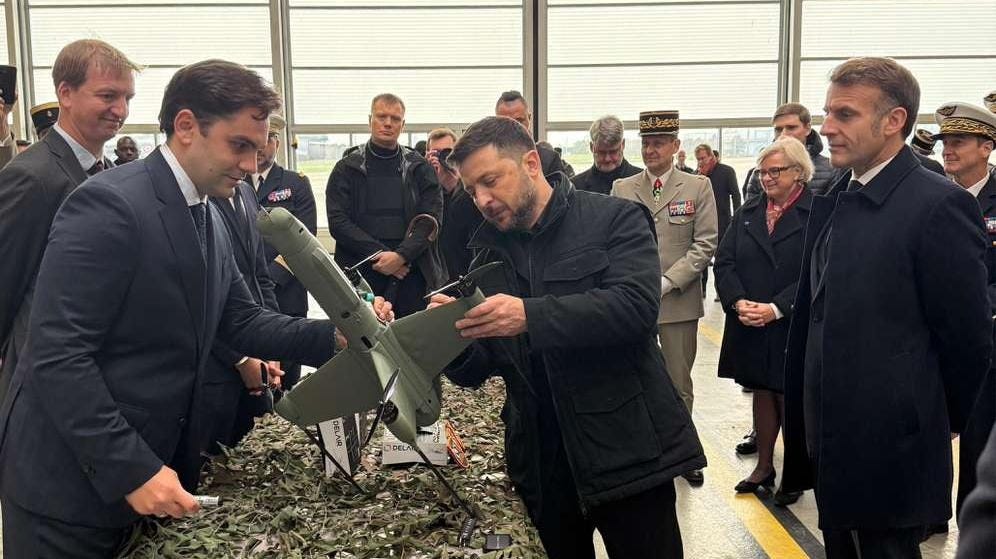
Whoever controls their supply chain controls their destiny
This change of scale shatters Western military orthodoxy. Until now, calibrated for one-off expeditionary operations, our armies favored ultra-sophisticated systems produced in very small numbers. But once a conflict turns into a war of position, the real moat inevitably moves to the assembly line.
Survival no longer depends solely on R&D, but on the absolute primacy of physical production capacity. A brutal reality summed up by Martin de Gourcuff:
“In Ukraine, what makes the difference is being able to produce hundreds of thousands of units. It is not so much the intrinsic performance of the system, although obviously that helps. But performance and cost are generally highly correlated; so we end up with a fundamental trade-off to make between performance and mass.”
In a world where high intensity is becoming the norm again, mass production implies total control of the supply chain. For our Defense Tech startups, the ambition is clear, albeit complex: breaking free from the double dependency on China and the United States.
The case of the United States is particularly tricky. While they remain historical allies, protectionist tensions, exacerbated by Donald Trump’s return to the White House, are rewriting the rules. The main threat to European companies lies in the ITAR (International Traffic in Arms Regulations) compliance. The moment a single American component subject to ITAR is integrated into a system, no matter how small, the entire final product is “infected” by the standard, forcing the European company to request an export license from the US government.
On the software side, the market remains largely dominated by American tech giants. To train its models, Comand AI must source GPUs outside of China, turning to Taiwan, South Korea, or Vietnam. At Harmattan AI, which uses powerful hardware accelerators, there is currently no viable alternative to the American giant Nvidia.
At Alta Ares, strategic partnerships in Asia, particularly with Taiwan, are a deliberate choice, as Hadrien Canter explains:
“We work with Taiwan for production capacities and niche expertise, but also because they are an ally. Taiwan faces the same threat as Ukraine today, and buys French equipment. We created this company out of conviction. When we know that China supplies 75% of the electronic components for Iranian Shahed drones, why shouldn’t we provide our assistance to Taiwan?”
Wanting to relocate the entire value chain back to Europe, however, runs up against the wall of economic realities. The production of cutting-edge semiconductors requires massive investments and relies on indispensable civilian players. Arnaud Valli provides a lucid assessment:
“We are dependent on civilian market structures to get our GPUs. As long as Nvidia manufactures its cards in Asia, we will be dependent. The smallest TSMC factory in the United States requires $12 billion in investment. Relocating therefore requires a strategic investment vision from the State, from data centers to production, and above all accepting, at least for a time, to produce at a loss compared to components made in Vietnam that will always be cheaper. It is a real political and industrial choice.”
Furthermore, the chain is globalized and hyper-specialized: TSMC cannot manufacture its chips without extreme ultraviolet (EUV) lithography machines from the Dutch company ASML, which holds a near-global monopoly on this technology. Europe cannot do without Taiwan, which cannot do without Europe.
While there are vast European programs to relocate the manufacturing of micro-components or batteries, the road is long. In the meantime, the hardware remains dependent on Asian or American civilian markets for cost and labor reasons. Faced with China’s hegemony over rare earths, which are essential for motor magnets, batteries, or radiofrequency systems like radars, agility is essential. French startups are expanding internationally to secure their supplies and markets: Alta Ares is forging ties in the Middle East for radar and electro-optical expertise, while Harmattan AI is expanding into Switzerland, the United States, and the United Arab Emirates.
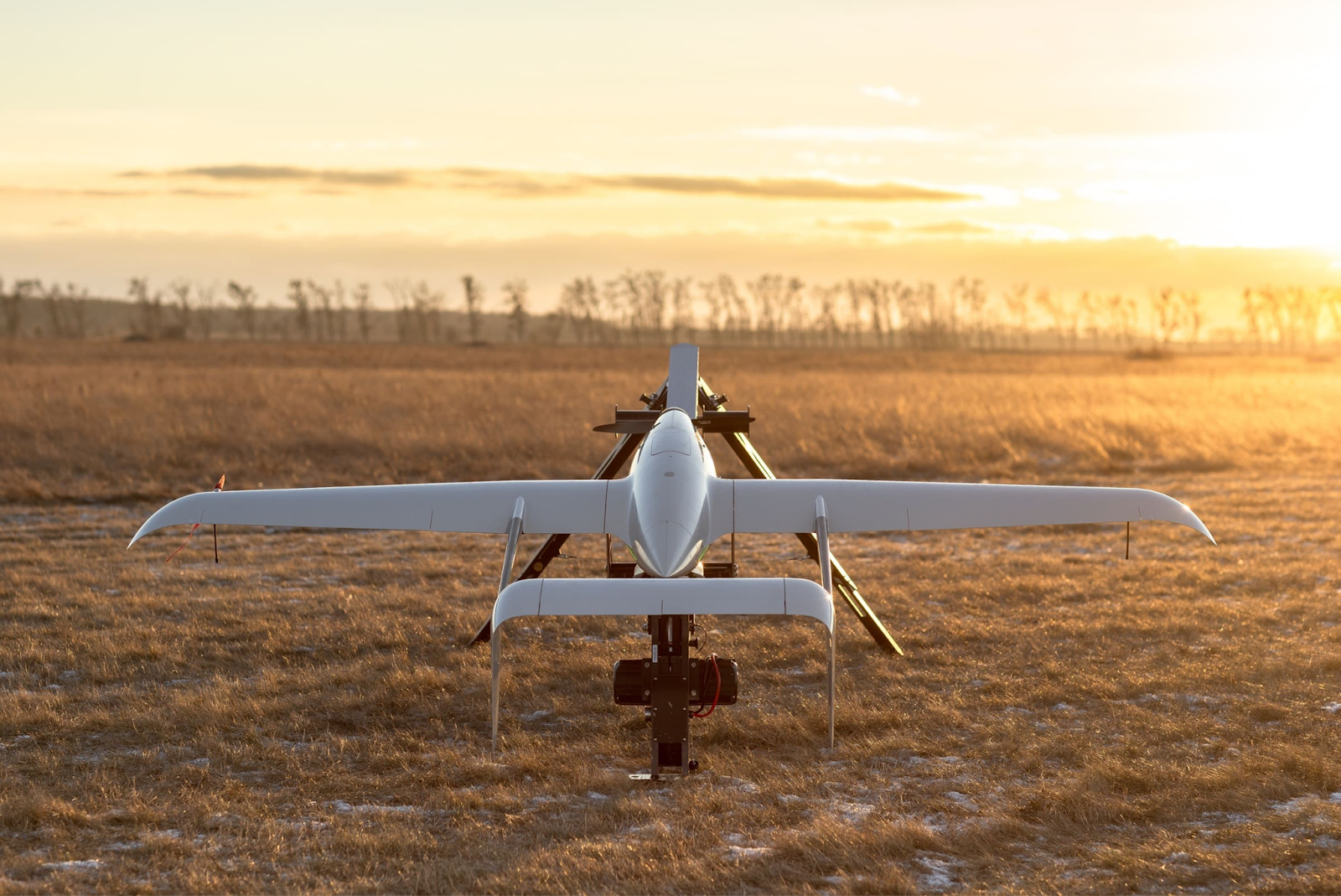
European Defense: An unfinished puzzle
Ultimately, building a sovereign supply chain raises a much broader question: the harmonization of European defense systems. And the task is colossal.
Despite their geographical proximity, European countries think about war through the prism of their own history. A former colonial power does not project its forces in the same way as Germany, which was militarily constrained for a long time, or Poland, which lives with the Russian threat at its borders. This divergence of objectives creates an industrial fragmentation bordering on the absurd: “In Europe, there are 15 different types of tanks. In the United States, there is only one,” points out Martin de Gourcuff.
The relationship with the American nuclear umbrella is just as divisive. Driven by de Gaulle’s vision, France built a strategic autonomy unique in Europe, distinguishing itself by its ability to design its own aircraft carriers, nuclear submarines, and fighter jets. Constrained by a small domestic market, this model contrasts with the reality of many European neighbors, strategically and technologically vassalized by Washington.
One might have thought that recent geopolitical upheavals, up to Donald Trump’s most surreal proposals, like his idea of taking Greenland back from Denmark (by buying it or, if necessary, by force), would be a definitive wake-up call. But the inertia remains, and many Europeans still refuse to consider that their historical ally might prioritize its own interests to the detriment of those of the Old Continent. Faced with these industrial and political realities, one question remains unanswered: is European Defense condemned to be nothing more than a chimera?
[...]
Next →
Ep. 3 | On the Edge: From the Front Line to the Frontier of Innovation, Meet the French Startups Building Tomorrow’s Defense

This article was written in partnership with Hexa. Hexa recently launched a new accelerator, Hexa Sprint, which is currently supporting defense startups through its program.
If you enjoyed this edition, please consider sharing it with a colleague or friend who wants to understand how geopolitics and tech intertwine.
Did a friend forward this to you? Subscribe and get Mind The Gap directly in your inbox.
Best,
Agathe & Emma
 | A guest post by
|
Great article looking forward for part 3